
 EN



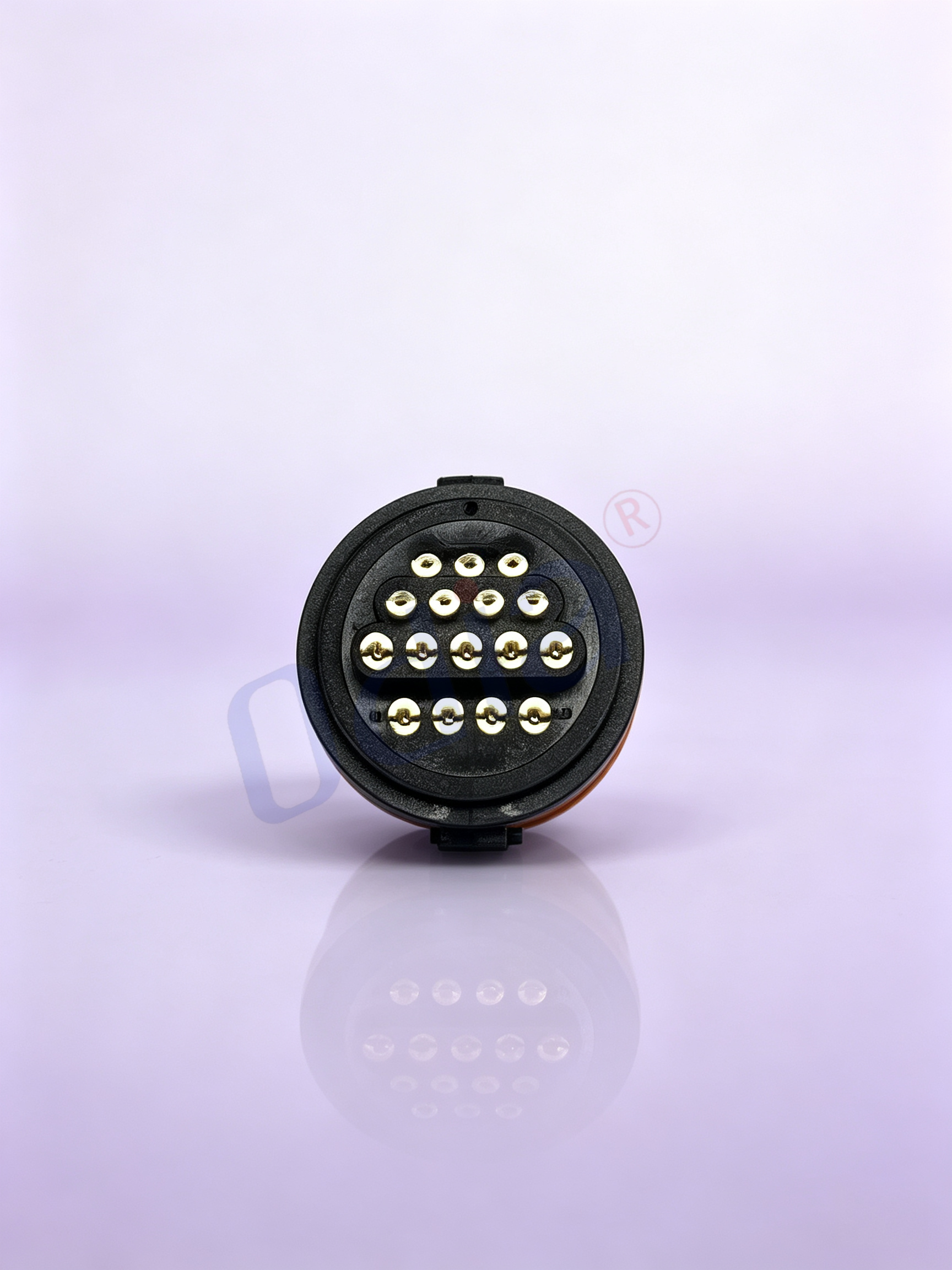
The Contact Interface That Does Not Compromise
Round hole pin headers, also known as machined pin headers, occupy a different tier of the connector hierarchy than their stamped and formed counterparts. The difference is not cosmetic. It is a fundamental divergence in how the contact interface is manufactured, how it performs under stress, and how long it lasts in environments where failure is not an option.
In high-reliability applications, the contact interface is often the weakest link in the signal chain. A connector that performs flawlessly on a bench can develop intermittent faults after thermal cycling, vibration exposure, or repeated mating. Round hole headers address those failure modes at the contact geometry level, which is why they appear consistently in military, aerospace, medical, and industrial control designs where a single contact failure can cascade into system-level consequences.
Machined vs. Stamped: A Structural Difference That Matters
The manufacturing process for round hole headers is fundamentally different from that of stamped headers. Stamped contacts are formed by punching and bending metal strip into shape. The process is fast and inexpensive, but the resulting contact has seams, edges, and a geometry that limits contact surface area.
Machined contacts are produced on screw machines that cut solid brass or copper alloy into precision cylindrical shapes. The machining process produces a seamless, solid contact with tightly controlled dimensions. The socket side of the interface typically uses a beryllium copper inner clip with multiple fingers that grip the mating pin around its full circumference.
That circumferential grip is the key differentiator. A stamped socket contact touches the mating pin at a limited number of points, typically on one or two sides. A machined round hole socket with a four-finger or six-finger clip makes contact around the entire pin, creating a gas-tight connection that resists oxidation and maintains consistent contact resistance through vibration and thermal cycling.
| Feature | Stamped Contacts | Machined Round Hole Contacts |
|---|---|---|
| Manufacturing | Punch and bend | Screw machined |
| Contact Geometry | Point or edge contact | 360-degree circumferential |
| Contact Resistance | Higher, variable | Lower, consistent |
| Mating Cycles | Moderate | Extended |
| Vibration Performance | Degrades over time | Maintains contact force |
| Cost | Lower | Higher |
Comparative characteristics of stamped versus machined contact technologies.
Why Vibration and Thermal Cycling Favor Round Hole Designs
Vibration and thermal cycling are the two environmental stressors most likely to expose weaknesses in a contact interface. Round hole headers handle both better than stamped alternatives, and the reasons are rooted in contact mechanics.
Under vibration, the mating pin and socket experience relative motion. In a stamped contact, the limited contact area means that any motion translates directly into a change in contact resistance or a momentary open circuit. The spring force holding the contact together varies with the vibration amplitude, creating fluctuating signal integrity.
A machined round hole contact with a multi-finger clip distributes that spring force around the full circumference of the pin. The result is a contact system that maintains consistent normal force even when the pin moves slightly within the socket. The circular geometry provides a more secure fit with greater contact surface area, which is why machined pin headers are frequently specified in applications where vibration is a known problem.
Thermal cycling presents a different challenge. As temperature changes, materials expand and contract at different rates. A stamped contact, with its limited contact area, may lose contact pressure at temperature extremes. A machined contact with a beryllium copper clip maintains its spring properties across a wide temperature range, typically from -40°C to +105°C or beyond, ensuring consistent contact force whether the assembly is cold-soaked or heat-stressed.
Contact Resistance and Signal Integrity in Sensitive Circuits
Contact resistance is not a constant. It varies with the contact force, the surface condition, and the presence of oxide films or contamination. In low-level signal circuits, even small variations in contact resistance can introduce noise, offset errors, or intermittent faults that are difficult to diagnose.
Machined contacts typically exhibit lower and more stable contact resistance than stamped contacts. The solid construction and circumferential contact geometry minimize the resistance contribution of the interface itself. For applications involving sensitive analog signals, precision references, or low-level sensor outputs, that stability translates directly into better measurement accuracy and fewer calibration issues.
The solid-bottom barrel design of machined sockets also eliminates a problem known as solder wicking. In stamped contacts with open construction, molten solder can travel up the contact during soldering, potentially interfering with the mating interface. Machined contacts with a closed bottom prevent wicking entirely, ensuring that the contact surfaces remain clean and the mating dimensions stay within specification.
Real-World Reliability: Where Round Hole Headers Earn Their Premium
Round hole headers appear in applications where the cost of failure is measured in more than component replacement. Automated test equipment, for example, may subject a header to thousands of mating cycles over its service life. A stamped contact that develops higher resistance after a few hundred cycles becomes a maintenance burden and a source of measurement uncertainty. A machined contact maintains its electrical characteristics through those cycles, providing stable test conditions year after year.
Industrial control systems present a different set of demands. PLC modules and robotic controllers often operate in environments with continuous vibration, temperature swings, and electrical noise. A machined header's consistent contact force and low resistance contribute directly to signal integrity in these conditions.
Medical electronics represents a third category where round hole headers are common. Diagnostic instruments and patient monitoring equipment require connections that will not degrade over time and will not introduce artifacts into sensitive measurements. The gas-tight connection formed by a machined contact with a beryllium copper clip provides a level of reliability that stamped contacts cannot match.
The trade-off is cost and board space. Machined headers cost more to manufacture because the machining process is slower than stamping. They also tend to have slightly larger footprints for the same pin count. For high-volume consumer products where cost pressure is intense and operating conditions are benign, stamped headers remain the appropriate choice. The premium for machined contacts is justified when the application genuinely requires the reliability they provide.
Matching the Contact Technology to the Application
Selecting round hole headers is not a blanket decision. The right choice depends on a realistic assessment of the operating environment, the required mating cycle count, and the consequences of a contact failure.
Applications that involve continuous vibration, wide temperature excursions, exposure to moisture or chemicals, or a requirement for low and stable contact resistance are natural candidates for machined contacts. Applications where the header is mated once during assembly and never touched again, operating in a controlled environment, may not benefit enough from the machined construction to justify the cost.
For design teams that want to evaluate machined headers alongside stamped alternatives, working with a manufacturer that produces both types under one quality system provides a practical advantage. Odia Electronics manufactures pin headers and related interconnect components through dedicated production operations, which means contact specifications, plating options, and mating tolerances can be compared and validated within a single supply chain.
Table of Contents
- The Contact Interface That Does Not Compromise
- Machined vs. Stamped: A Structural Difference That Matters
- Why Vibration and Thermal Cycling Favor Round Hole Designs
- Contact Resistance and Signal Integrity in Sensitive Circuits
- Real-World Reliability: Where Round Hole Headers Earn Their Premium
- Matching the Contact Technology to the Application

