
 EN




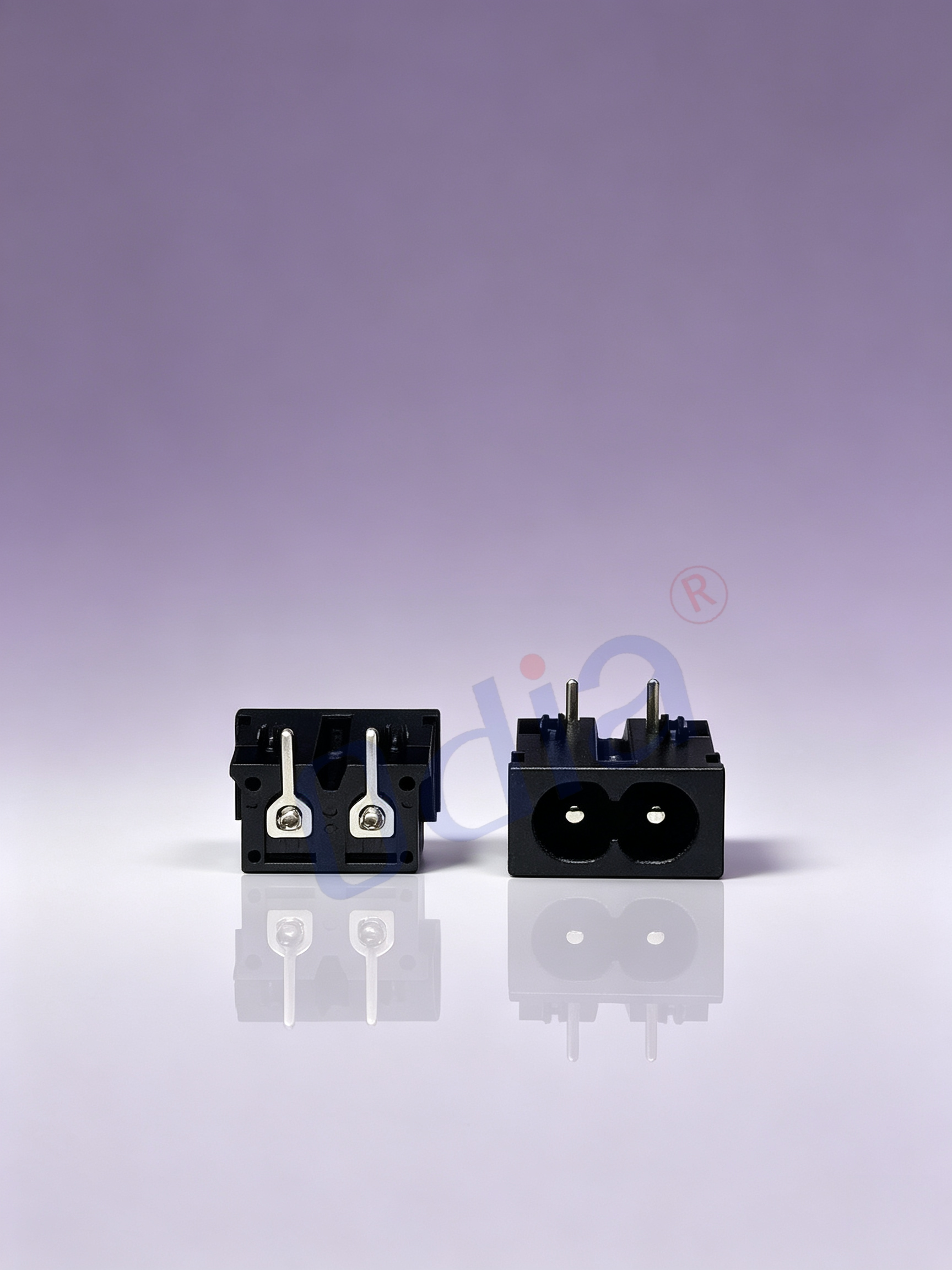
What Is an AC Power Socket?
An AC power socket—also referred to as an AC power inlet, AC receptacle, or IEC inlet—is the fixed connector mounted on equipment chassis to accept a mating power plug and deliver AC mains power to the device. Panel-mount configurations are standard for electronic and industrial equipment: the socket is installed in an enclosure cutout, secured with screws or snap-fit clips, and wired to the internal power circuit. You already know that an AC power socket must match your regional mains standard; what is worth spending time on is how the socket's rated current, ingress protection level, and certification scope interact with your specific deployment environment—because that is where most selection errors occur in practice.
Key Product Characteristics
- Rated Voltage and Current: Standard IEC 60320 panel-mount inlets are commonly rated at 250V AC in 10A or 16A variants; NEMA configurations cover 125V/15A and 250V/20A applications. Selecting the correct current rating requires accounting for the derating curve at elevated ambient temperatures, not just the nominal load under controlled conditions.
- Connector Standard and Configuration: IEC 60320 defines globally recognized inlet and connector families (C14, C20, C8, and others) widely adopted across power supply and equipment designs. NEMA 5-15 and CEE 7/5 are the dominant panel-mount standards for North American and continental European markets respectively.
- Ingress Protection Rating: AC power sockets are available from IP20 (finger-safe, indoor) through IP44 (splash-protected), IP55, and IP67 (immersion-resistant) variants. The IP rating listed on a product page typically applies to the mated condition only—an unmated or improperly installed socket has significantly lower environmental protection. If the deployment is outdoor or subject to condensation, confirm the IP specification covers the unmated state before committing to a part.
- Housing Material: Polycarbonate and high-impact nylon are standard materials for IEC inlet housings; metal-bodied versions provide additional mechanical robustness for heavy industrial panel installations exposed to impact and vibration.
- Safety Certifications: CE, UL, VDE, and PSE markings indicate third-party test compliance with regional safety standards. For AC power socket products sold into the EU, North American, Japanese, or Australian markets, verifiable certification documentation is a procurement threshold requirement. The guidance here aligns with the general direction of connector performance standards applicable to safety-critical power entry components; when citing a specific standard number, confirm the current active edition before publishing.
- Locking and Retention Mechanisms: Screw-lock and snap-fit panel retention systems each have different implications for installation time, panel material compatibility, and vibration resistance. For industrial applications where panels experience mechanical vibration, confirm the retention method and torque specification before committing to a panel cutout design.
Common Applications
AC power sockets and inlets serve a wide range of applications across industrial, commercial, and consumer sectors. In industrial automation environments—PLC enclosures, servo drive cabinets, and control panels—panel-mount IEC inlets provide standardized power entry points that simplify field servicing and cable management. Medical device manufacturers use certified IEC C14 and C20 inlets for patient-connected equipment where power entry component certification is a regulatory requirement. HVAC systems, commercial lighting controllers, and UPS equipment use panel-mount AC receptacles for modular power connections that field technicians can disconnect and replace without specialized tooling.
Telecommunications infrastructure, server racks, and data center power distribution units rely on IEC-standard inlets for standardized cord sets and high-density installations. Outdoor and marine applications—solar inverter enclosures, EV charging station equipment, and outdoor industrial machinery—require weatherproof AC power socket variants rated IP55 or higher to resist condensation, dust ingress, and direct water exposure. In outdoor solar installations, contact oxidation visible after a single season is a reliable indicator that ambient humidity and thermal cycling were underestimated in the original IP specification. Starting from the actual deployment environment rather than the product datasheet produces more reliable AC power socket selections.
How to Choose the Right AC Power Socket
For industrial equipment where mechanical vibration and thermal cycling are present, the selection criteria should shift toward contact retention force and housing material temperature rating—not just the nominal current specification. Everything may check out during initial testing, but after repeated thermal cycling in an industrial cabinet environment, intermittent contact issues can appear, tracing back to differential thermal expansion between the inlet body and panel material. A structured selection process reduces this risk.
- Define the deployment environment first: Indoor controlled, outdoor sheltered, outdoor exposed, or subject to water ingress? The minimum IP rating requirement follows directly from this assessment, not from the product catalog.
- Identify the required regional standard: IEC 60320, NEMA, or CEE 7 series? Engineers designing products for multiple export markets must identify an AC power socket specification that satisfies the most demanding regulatory and environmental requirement across all target regions—a single compliant choice rather than separate regional variants where possible.
- Determine current and voltage rating with derating: Apply a thermal derating factor if the ambient temperature at the installation point regularly exceeds 25°C. Operating an AC power inlet at its rated current in elevated ambient conditions is a documented cause of premature contact degradation and insulation stress.
- Confirm required certifications: UL for North America, CE and VDE for Europe, PSE for Japan, SAA for Australia. Procurement teams in regulated markets use the documentation package behind the marking—test reports, declaration of conformity, RoHS compliance statements—as a supplier qualification criterion, not just the marking itself.
- Verify panel cutout dimensions and mounting method: Confirm the cutout size, retention clip spacing, and panel thickness compatibility. Mismatched cutout dimensions are frequently discovered only at the assembly stage, which is among the more preventable causes of production delay in panel-build operations.
If the operating environment remains within controlled temperature and humidity ranges, standard IEC 60320 panel-mount inlets with IP20 protection provide adequate performance and the widest product availability. If the deployment is outdoor or subject to condensation, IP44 at minimum—and IP67 for immersion risk scenarios—represents the appropriate specification floor.
Compliance and Environmental Ratings for Industrial and Export Buyers
You already know that CE and UL markings are baseline requirements for most regulated procurement environments. What is worth spending time on is the documentation package behind those markings. Procurement teams in the EU, Japan, Korea, and North America increasingly evaluate documentation quality—RoHS and REACH compliance records, third-party test reports, and declaration of conformity files—as a proxy for overall supplier technical capability. RoHS-compliant materials across the full AC power socket product line support customers' export compliance workflows without requiring separate documentation requests for each market.
The unit price of a panel-mount AC power socket is rarely where the real procurement cost lies. In an industrial installation, a single contact failure requiring field service access can cost multiples of the socket's purchase price in labor time, equipment downtime, and potential consequential damage. Procurement evaluation that focuses only on unit cost without assessing batch quality consistency, certification documentation completeness, and supplier technical responsiveness tends to underestimate total acquisition risk.
AC power socket application environments are becoming more demanding across industrial sectors. Factory automation, EV charging infrastructure, and outdoor energy systems impose higher thermal range requirements, greater mechanical vibration loads, and stricter ingress protection standards than traditional consumer or office electronics. Standardization bodies including IEC and UL publish connector performance standards that define minimum test requirements and serve as qualification references for buyers in regulated and high-reliability applications. Referencing the applicable standard in a procurement specification helps align supplier selection with actual application requirements and simplifies the qualification documentation review.