
 EN



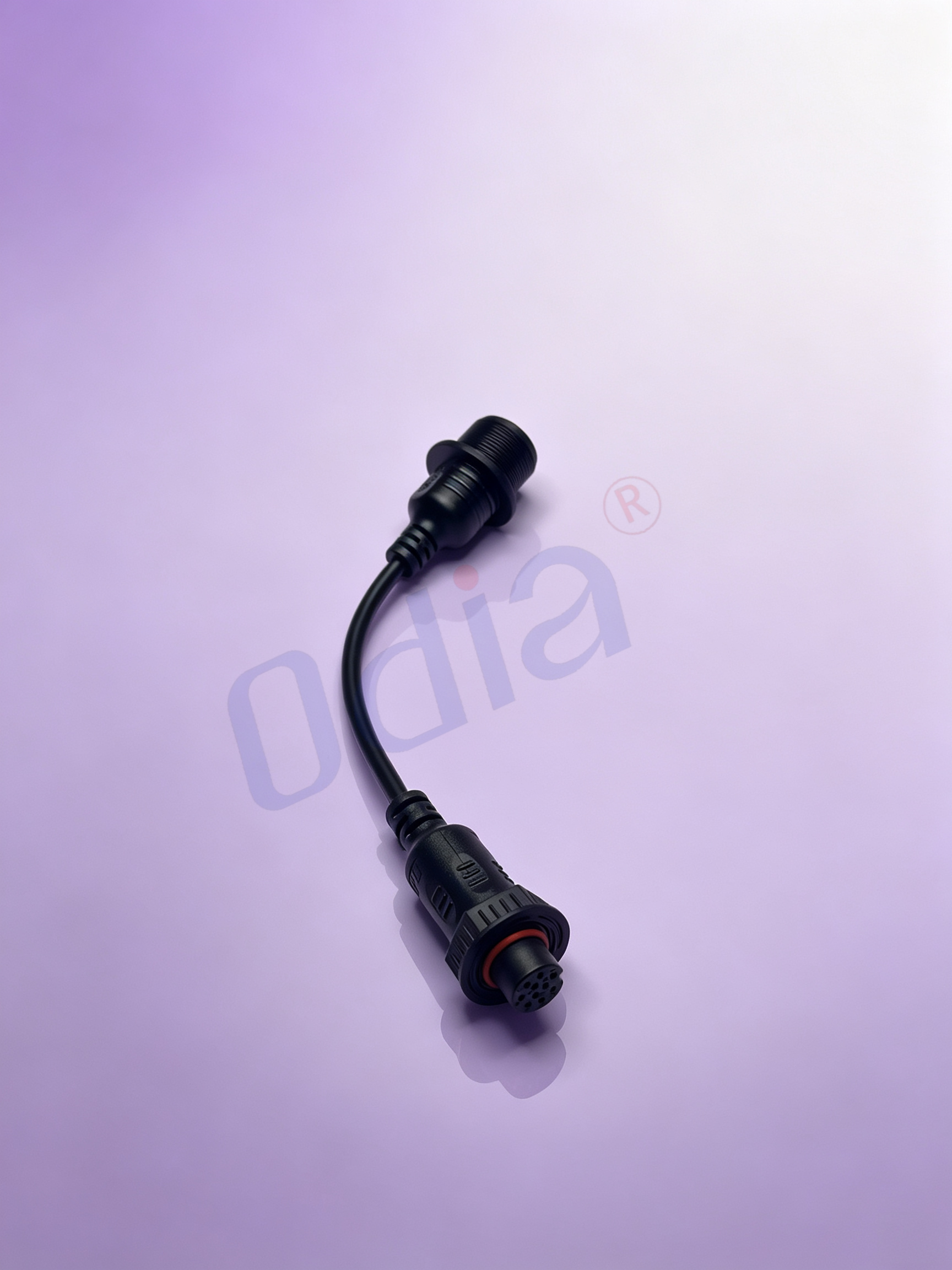
The Price Tag That Lies to Your Budget
A cable assembly sitting on a distributor's shelf with a $15 price tag looks like a bargain next to a custom-built counterpart at $45. That comparison, however, is about as misleading as judging a car by its sticker price alone. The real cost picture only emerges once installation labor, field failures, inventory waste, and production downtime enter the equation. Those hidden costs typically account for the majority of a cable assembly's true cost over its service life, and they hit off-the-shelf users far harder than most engineering teams expect.
The decision between custom cable assemblies and off-the-shelf solutions is not about which one is cheaper on paper. It is about which one actually costs less to own, operate, and maintain over the full deployment cycle. Engineering teams that treat this as a simple procurement exercise often learn the hard way that the cheapest part number can become the most expensive line item.
What Off-the-Shelf Really Delivers and Where It Falls Short
Off-the-shelf cable assemblies serve a legitimate purpose. They are pre-manufactured, mass-produced, and designed around standard specifications. Distributors stock them, lead times are short, and no engineering involvement is required to place an order. For prototype builds, lab bench setups, or low-duty-cycle applications where specifications are still in flux, they can be genuinely useful.
The limitations surface once the application demands more than a generic solution can provide. Standard cable assemblies offer limited connector configurations, may not withstand harsh environments involving heat, moisture, or electromagnetic interference, and typically lack traceability or lot control options. When a system operates under continuous motion, tight bend radii, or exposure to chemicals and extreme temperatures, a generic cable's design margins evaporate quickly.
There is also the physical fit problem. Off-the-shelf cables come in standard lengths and cross-sections. Routing a standard cable through a cramped enclosure often means accepting oversized conduits, awkward bends, or connectors that do not align with the mating interface. In compact designs, those compromises add up.
The Hidden Cost Equation That Changes Everything
The sticker price gap between off-the-shelf and custom assemblies tends to shrink dramatically once the full cost structure is mapped out. A custom cable assembly typically costs more per unit upfront, but the downstream savings on adaptation labor, field failures, and warranty claims can flip the equation entirely.
| Cost Factor | Off-the-Shelf | Custom Assembly |
|---|---|---|
| Unit Price | Lower per unit | Higher per unit |
| Adaptation/Modification Labor | Significant per-unit cost | Built to spec, minimal |
| Inventory Waste | Notable waste rate | Very low waste rate |
| Installation Time | Longer per installation | Shorter per installation |
| Field Failure Rate (Year 1) | Higher | Substantially lower |
| Total Cost of Ownership | Higher over service life | Lower over service life |
Data drawn from comparative analyses of cable assembly sourcing strategies.
The adaptation labor line deserves particular attention. An off-the-shelf cable that does not quite fit the routing path requires technicians to modify connectors, add extensions, or re-route adjacent components. That labor cost, multiplied across a production run, can exceed the price difference between off-the-shelf and custom units by a wide margin.
Then there is the field failure dimension. Generic cables operating outside their design intent experience higher failure rates in the first year. Each failure triggers a service call, a replacement part, and downtime. In industrial settings, unplanned downtime costs far more than the cable itself. Over a five-year horizon, the total cost of ownership for off-the-shelf assemblies routinely exceeds that of custom solutions, even when the custom unit price is significantly higher.
Why Custom Assemblies Win on Performance
Performance differences between off-the-shelf and custom cable assemblies are not marginal. They are structural.
Flex life offers the clearest example. Off-the-shelf cables are typically rated for a limited number of flex cycles, adequate for many industrial applications but insufficient for high-duty-cycle equipment. A collaborative robot arm performing frequent cycles per minute over extended daily operation can exceed five million cycles in a matter of weeks. Custom assemblies engineered for continuous motion use specialized conductors, optimized lay lengths, and application-specific jacket materials to achieve a multiple of that flex life. The difference translates directly into replacement frequency and maintenance burden.
EMI shielding follows the same pattern. Generic cables offer basic or no shielding. Custom assemblies can incorporate braided shields, foil wraps, or combined configurations matched to the specific electromagnetic environment. For equipment with sensitive encoder feedback or vision systems, that shielding gap can mean the difference between reliable operation and intermittent position errors that are maddening to diagnose.
Space optimization is another area where custom designs pull ahead. Custom assemblies are built to exact cross-section requirements, with optimized bend radii and connector orientation. In dense packaging, where every millimeter of routing space matters, this precision eliminates the oversized conduits and awkward cable paths that off-the-shelf parts force upon a design.
When Off-the-Shelf Still Makes Sense
Custom is not the universal answer. There are scenarios where off-the-shelf cable assemblies are the pragmatic choice.
During prototype and R&D phases, specifications change frequently. Waiting for a custom build each time a design revision occurs slows iteration and burns engineering hours. Off-the-shelf cables let teams test concepts quickly without locking in a specification. Low-duty-cycle applications, where equipment operates intermittently and environmental stress is mild, may never accumulate enough flex cycles or thermal exposure to justify a custom design.
The tipping point usually arrives when the application moves from prototype to production, or when field failures begin to show a pattern. At that stage, the cost of inaction, measured in downtime, rework, and customer dissatisfaction, tends to dwarf the investment in a purpose-built assembly.
Engineering Discipline Separates Good Suppliers from Great Ones
Whether sourcing custom or off-the-shelf, the workmanship standard matters. IPC/WHMA-A-620 provides the industry-consensus benchmark for cable and wire harness fabrication and inspection, covering everything from crimp height verification to pull-force testing and 100% electrical continuity checks. A supplier that relies on visual inspection alone is not operating at the standard that high-reliability applications demand.
During a factory audit, three questions separate capable suppliers from the rest. First, does the facility use automated crimp force monitoring on every crimp cycle? This technology compares the force curve against a golden waveform and locks the press if it detects a missing strand, trapped insulation, or insufficient compression. Second, does the supplier perform destructive pull-force testing at the start of every shift and after every applicator change? Third, is 100% electrical testing performed on every unit, or is batch sampling accepted?
A harness manufacturer that answers all three affirmatively is operating with process controls that catch defects at the source rather than discovering them in the field.
For teams navigating these sourcing decisions, working with a manufacturer that combines connector production with cable assembly capabilities under one roof simplifies the supply chain considerably. Odia Electronics operates dedicated factories for both cable extrusion and connector manufacturing, which means the crimp interfaces and mating geometries are controlled from a single quality system. That vertical integration reduces the finger-pointing that occurs when a connector supplier and a cable assembler blame each other for field failures.

